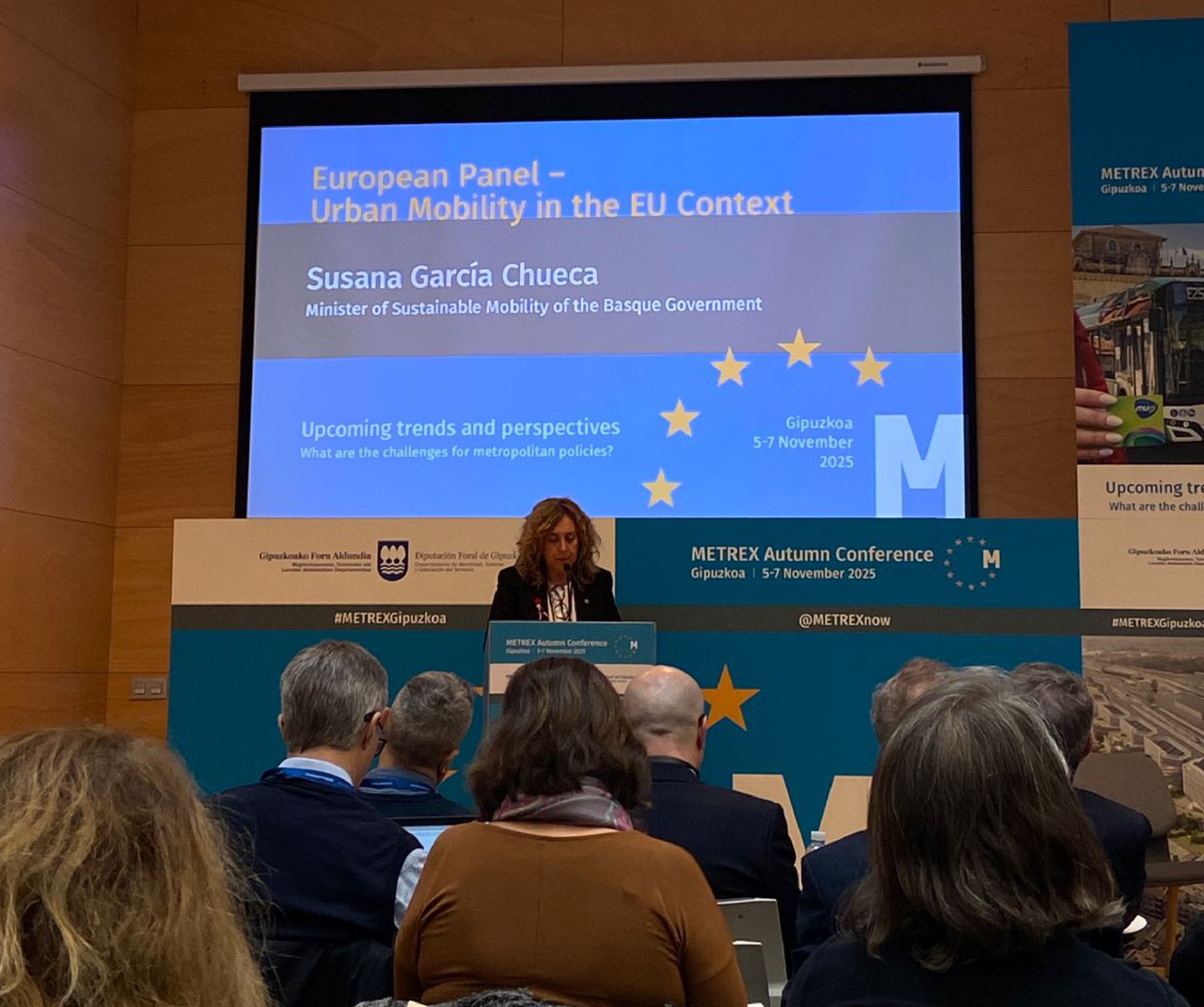
The main theme of the Metrex 2025 Autumn Conference was: Mobility as a Human Right.
This year’s autumn conference took place in Gipuzkoa. (Gipuzkoa—a small coastal and mountainous metropolitan area with an inherently polycentric structure—currently stands on the brink of large-scale transformations.)
Experts from across Europe gathered to exchange views on some of the most pressing metropolitan challenges—from climate adaptation and housing to the circular economy and data collaboration.
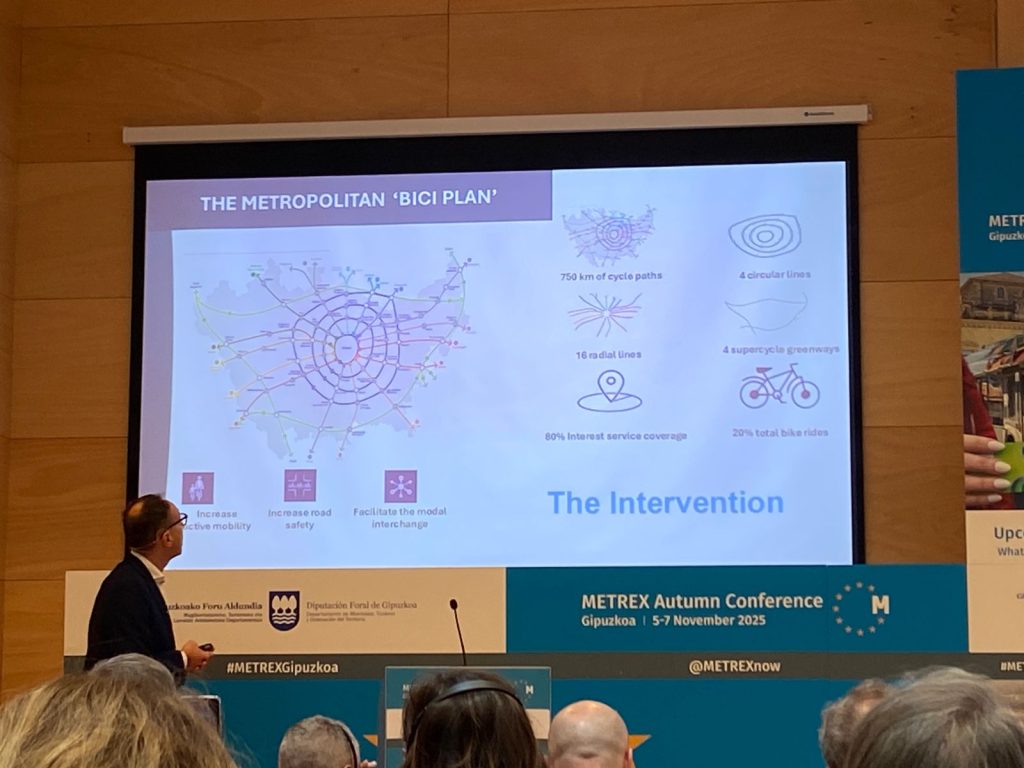
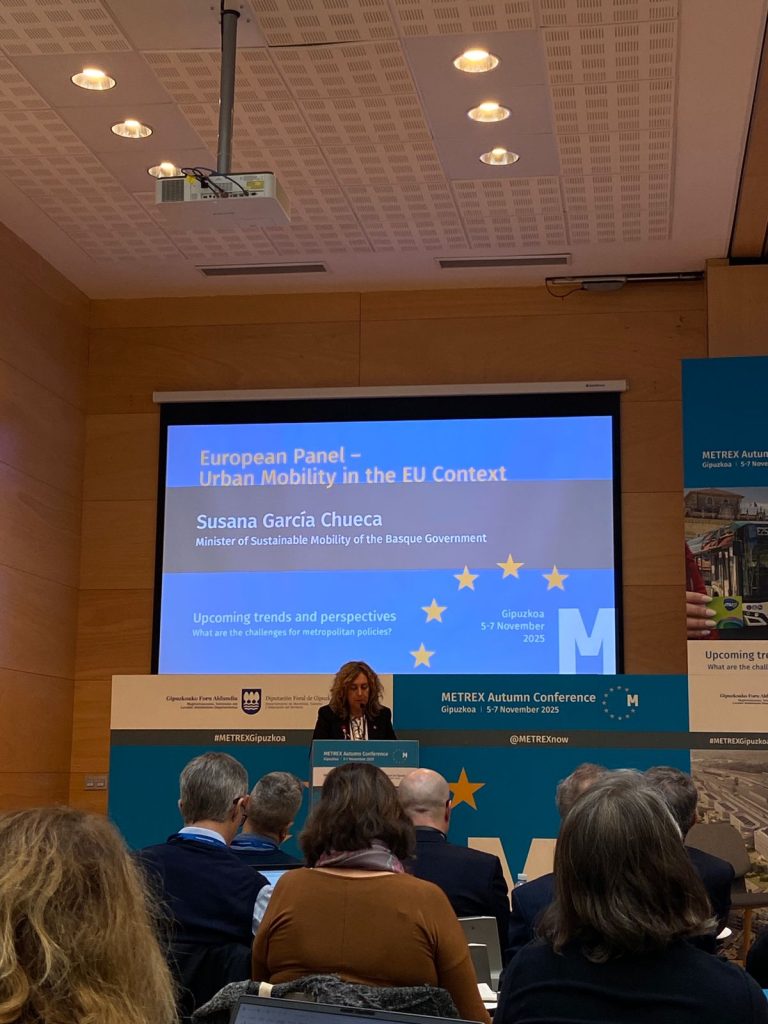
There was significant discussion about mobility, as it has been defined as a fundamental right in the new Spanish law. €10 billion from the EU Recovery Fund has been allocated for this purpose. The goal is to ensure equal access to: work, education, and healthcare. It also aims to support sustainable transport, multimodality, and safe routes for everyone, with special attention to women and people with disabilities.
The VialRun project in Irun proved particularly interesting, as it transforms the border town into a strategic transport hub between Spain, France, and Europe.
It combines:
-
- A new high-speed rail station,
-
- An innovative district,
-
- Residential development and revitalization of vulnerable areas,
-
- Restoration of cultural heritage.
The Basque Country is demonstrating how strategic investment and political will can transform regions—and become a benchmark for others.
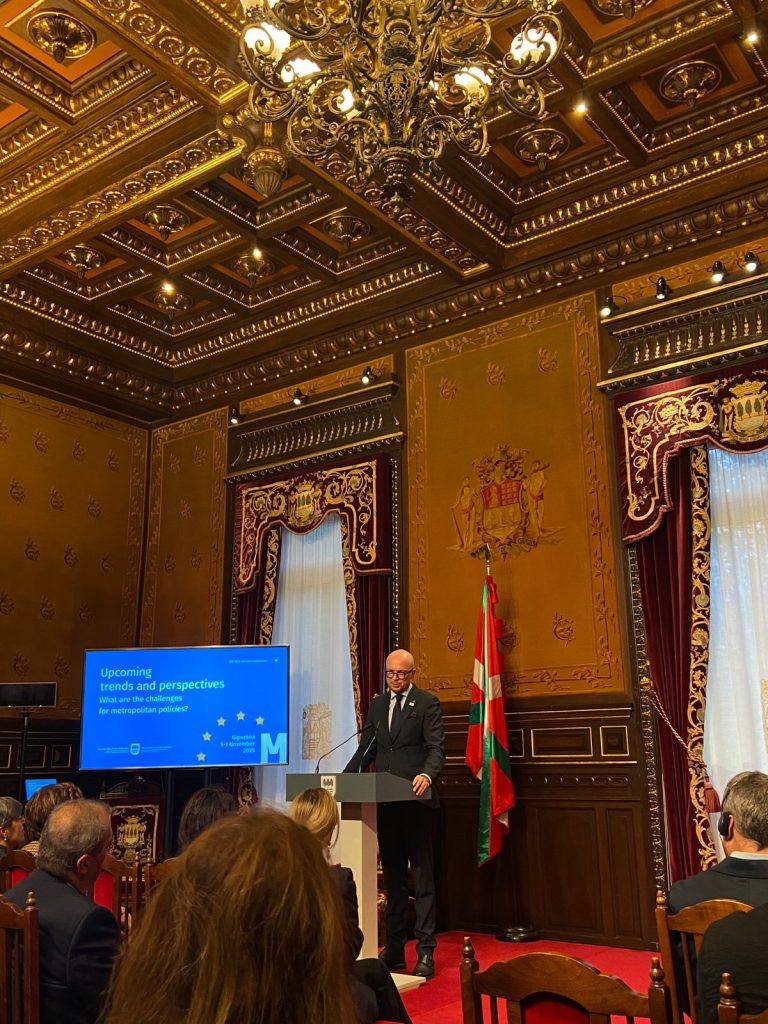
The conference included discussions in the World Café format on various topics, including:
“MappingMETREX Expert Group”: Focused on how to make European geospatial data clearer, more accessible, and more useful for the development of metropolitan areas.
“NordicBalticNetwork”: Focused on how the regions of Northern and Baltic Europe combine climate change adaptation with housing needs and social cohesion. The main conclusion was that preparation and long-term adaptation must go hand-in-hand, based on the realities of each community.
“ClimateChallenge”: Stressed the importance of integrating climate adaptation at all planning levels—from regional strategies to the local design of urban spaces.
“EuroDeltaNetwork”: Continued the discussion on the circular (climate-neutral) transformation of the economy, featuring expert presentations from representatives of the OECD and the European Investment Bank (EIB).
“EconoMETREX Working Group”: Discussed the economic strengths of the regions, current challenges, and opportunities for deepening European cooperation.
The third day of the conference was important for the entire Metrex community, as the elections for the President and Vice-Presidents of the association were held. We are pleased to welcome Marco Grigoli from Milan, Gianina Panata (Vice-President), and Sandeep Shingadia (Vice-President) to these positions.
We wish them effective work with METREX members to strengthen the role of metropolitan areas in European policies.