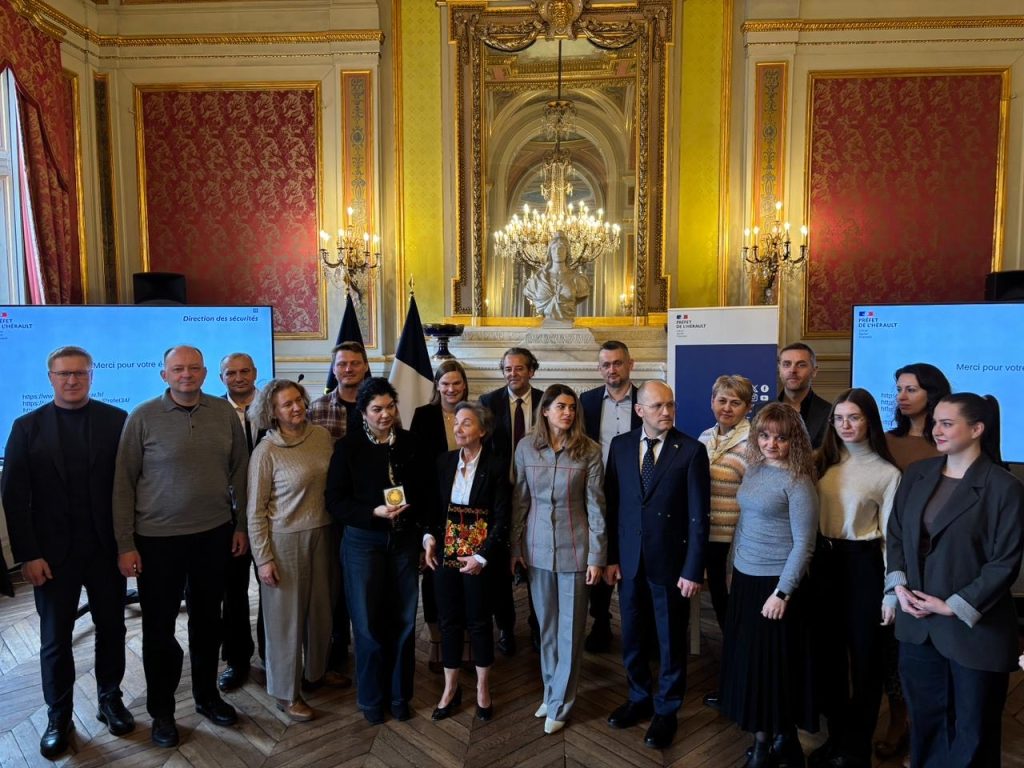
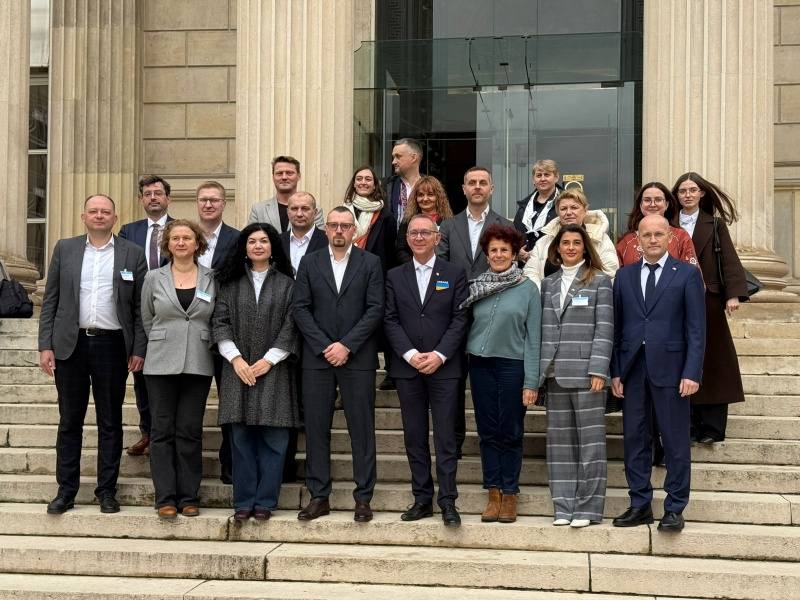
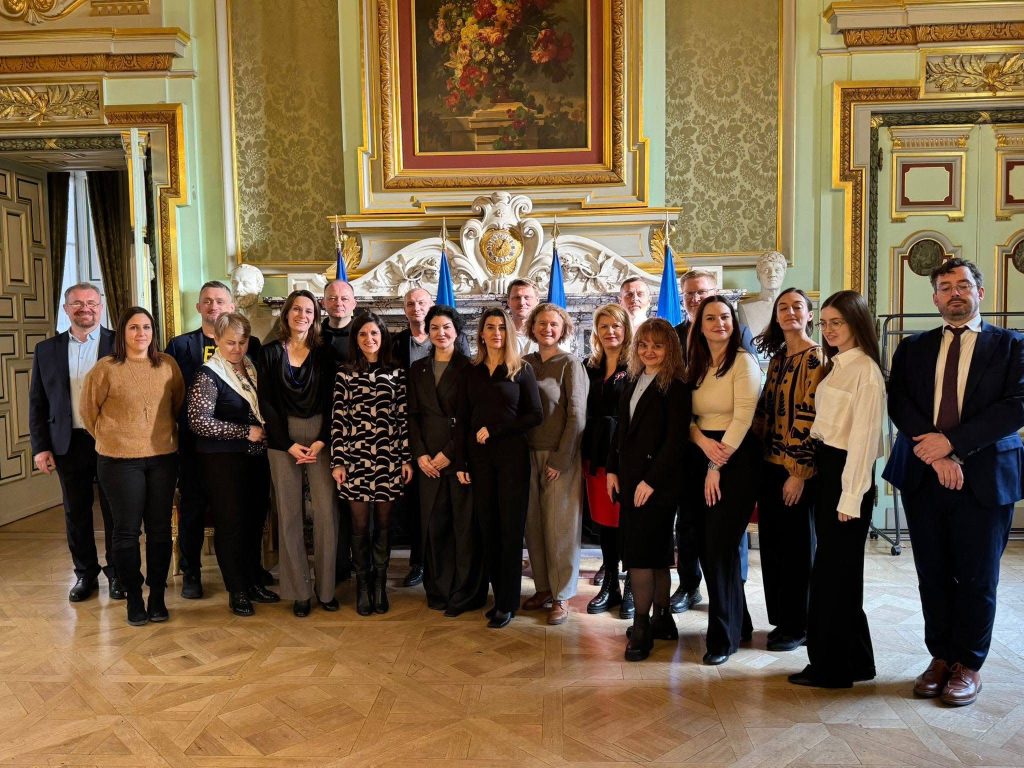
An official delegation from the Committee of the Verkhovna Rada of Ukraine on State Power, Local Self-Government, Regional Development, and Urban Planning, alongside the “Lviv Agglomeration” Association of Local Self-Governments, has concluded a vital working visit to France. The visit was organized by the French state international technical cooperation agency, Expertise France, as part of the RELEVE program.
The mission aimed to study the fundamental operations of French local self-government, with a specific focus on inter-municipal associations and developing solutions to strengthen the institutional capacity of metropolitan regions in Ukraine.
Today, nearly all French communes are integrated into one of the forms of inter-municipal structures: communautés de communes, communautés d’agglomération, or métropoles. The core principle of this model is functional: powers are transferred to the level where they can be implemented most effectively, considering territorial scale, population mobility, and infrastructural links.
A highlight of the visit was a meeting with Françoise Gatel, Minister for Rurality, Commerce, and Crafts (formerly Minister for Territorial Development and Decentralization), and members of the National Assembly’s delegation on decentralization.
Representing the Lviv Agglomeration were Executive Director Roman Kizyma and Board Member/Deputy Mayor of Lviv Liubomyr Zubach. Lviv was the only Ukrainian metropolitan region invited to study this extensive 40-year experience of building strong institutions with real powers and budgets.
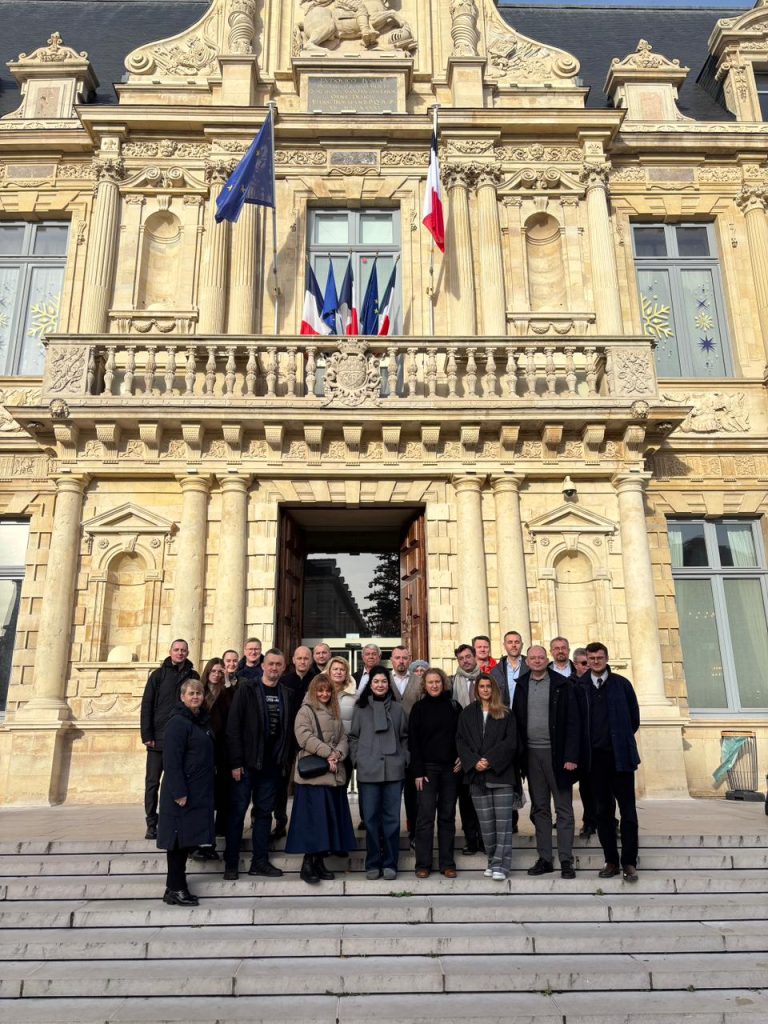

Key areas of study included:
- Delegation of powers from communes to inter-municipal associations and metropolises.
- Formation of shared transport, environmental, and infrastructure policies.
- Funding models for inter-municipal bodies.
- Mobility management, water resource management, and accountability mechanisms.
Case Studies: Grand Reims, Montpellier, and Lyon
Grand Reims: As a classic example of a monocentric urban agglomeration, Grand Reims unites over 100 communes with approximately 300,000 residents.
- It is a national leader in waste management.
- Their experience proves that an inter-municipal approach significantly reduces costs for individual communes.
- Shared investment planning is the key to high sorting rates and near-zero-waste infrastructure—a model highly relevant for the Lviv Agglomeration’s emerging waste management system.
The Prefecture System: The delegation paid close attention to the Prefect Institute, which ensures legality, strategic consistency, and efficient use of state resources without infringing on local self-government powers. This model of oversight and support, rather than executive command, is critical for Ukraine’s EU integration and reconstruction.
Montpellier: Recently granted “Metropolis” status, Montpellier demonstrated the benefits of higher-level associations: larger budgets and control over strategic infrastructure.
- Lesson learned: Purely voluntary cooperation in early stages without state strategic management can lead to “gaps” in logistics (e.g., airports not connected to tram lines).
- “Agglomeration policy must be both voluntary and strategically guided. Inter-municipal cooperation is not a hobby; it is an infrastructural and social necessity,” shared Roman Kizyma.
- Notably, Montpellier became the first major French city to make public transport completely free for residents, drastically reducing traffic.
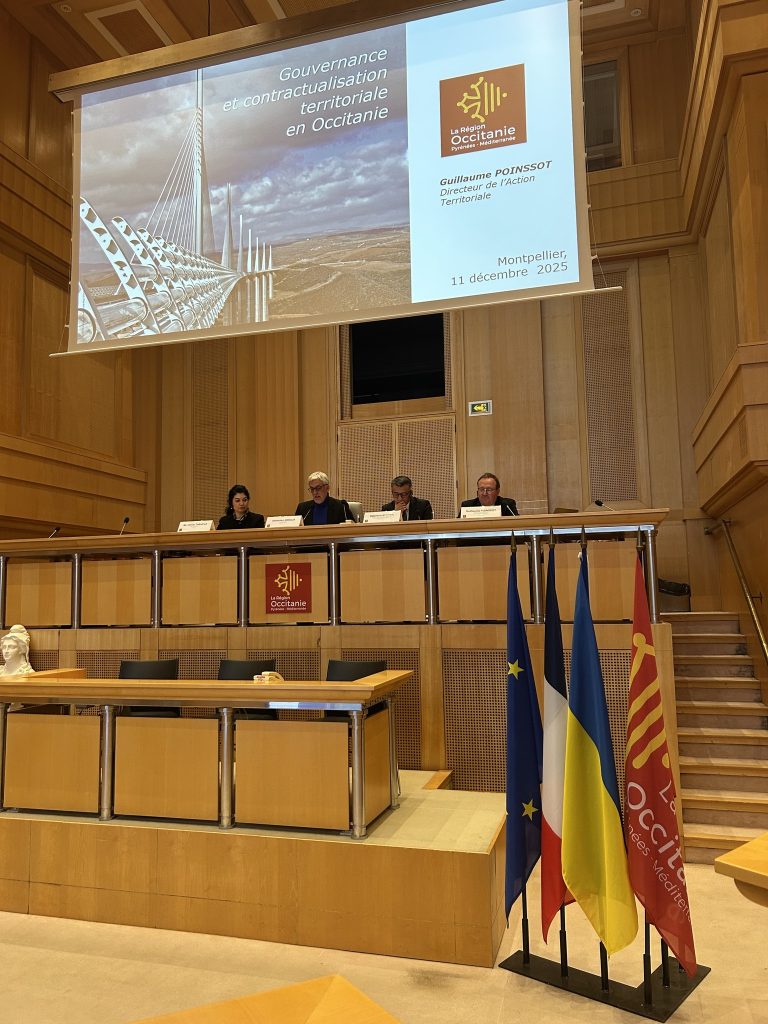
Occitanie: A meeting with the Regional Chamber of Accounts of Occitanie emphasized the need for independent audit bodies to ensure budget transparency and prevent corruption—a vital tool for decentralization without abuse.
Lyon: The final and most relevant stage was Lyon. As one of France’s 21 metropolises, it holds a unique legal status, functioning simultaneously as a city and a department (equivalent to a district).
Its new districts combine high density with innovative “rain infrastructure” for climate adaptation. By managing social policy, housing, and economic development, Lyon has become France’s second-largest economic power after Paris.
The visit confirmed that forming a strong, competitive, and European-style local self-government in Ukraine requires:
- Clear distribution of powers across different levels of government.
- Further financial decentralization, including the reform of personal income tax (PIT), reverse subsidy reforms, and local tax administration.
- Strong oversight mechanisms, such as regional chambers of accounts and a prefecture-style institute.
We extend our sincere gratitude to Expertise France and the RELEVE program for organizing this visit and providing practical knowledge that will shape our future tasks.є.